
Hebei YUBO Filtration Equipment Co., Ltd. Hebei YUBO Filtration Equipment Co., Ltd.
+86 15732177595
Hebei YUBO Filtration Equipment Co., Ltd. Hebei YUBO Filtration Equipment Co., Ltd.
+86 15732177595
In industrial solid-liquid separation processes, the performance of a centrifuge system depends on more than the rotational force generated by the equipment. The design and condition of the centrifuge basket directly influence how effectively liquids are removed, solids are recovered, and production efficiency is maintained.
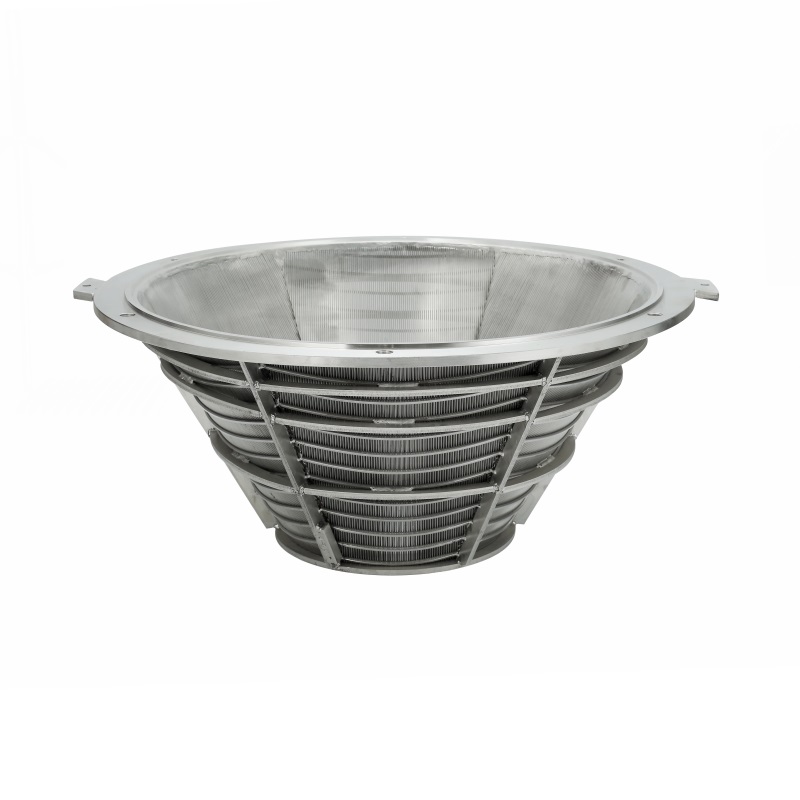
A wedge wire centrifuge basket filter acts as the separation interface between the rotating material layer and the discharged liquid. Its performance is determined by multiple engineering factors, including slot design, open area, structural strength, material selection, and operating conditions.
A properly designed basket does not simply allow liquid to pass through. It controls the interaction between centrifugal force, material movement, and filtration resistance to achieve stable separation performance.
Therefore, selecting a wedge wire centrifuge basket should be considered a system engineering decision rather than a simple replacement of a screen component.
Slot size is one of the most important parameters influencing centrifuge basket performance.
The purpose of the basket is to allow liquid to escape while retaining valuable solid particles. However, the ideal slot opening requires a balance between separation efficiency and processing capacity.
If the slot opening is too small:
Liquid drainage resistance may increase
Material throughput may decrease
More frequent cleaning may be required
If the slot opening is too large:
Fine solids may pass through the basket
Product recovery may decrease
Separation quality may be affected
The correct slot design is not simply the smallest possible opening. Instead, it should match:
Particle size distribution
Required solid recovery rate
Target moisture content
Material characteristics
In many industrial applications, optimizing slot size can improve separation performance without changing the centrifuge equipment itself.
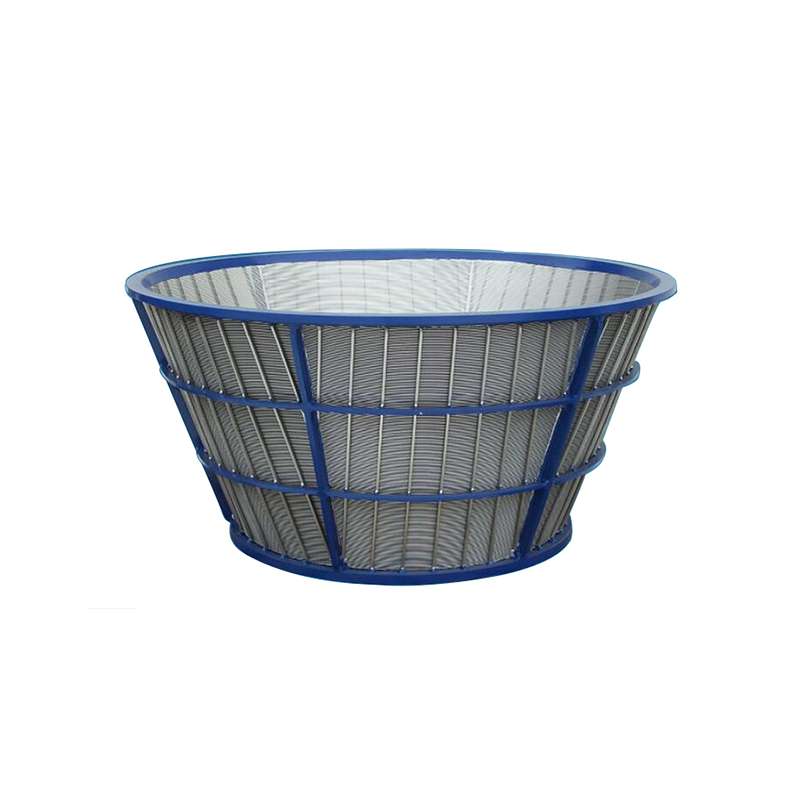
The open area of a wedge wire centrifuge basket determines how easily liquid can move through the screen surface.
During centrifugal operation, liquid must quickly pass through the basket while solids remain inside. If the effective drainage area is insufficient, liquid removal efficiency may decrease, leading to higher residual moisture in the discharged solids.
A well-designed open area provides:
Improved liquid discharge capability
Reduced flow resistance
Better utilization of centrifugal force
However, maximizing open area is not always the best solution.
An excessively open structure may reduce mechanical strength and affect the basket’s ability to withstand continuous rotational loading.
Therefore, engineering design requires a balance between:
Drainage capacity + Structural stability + Service life
The optimal basket design is one that maintains efficient liquid removal while remaining mechanically reliable during long-term operation.
The performance of a centrifuge basket is closely related to the geometry of the wedge wire structure.
Unlike simple perforated surfaces, wedge wire designs use precisely formed profile wires to create controlled openings. The shape of the wire influences:
Material contact behavior
Particle movement
Wear distribution
Cleaning characteristics
The support structure behind the screen surface is equally important.
During operation, centrifuge baskets experience repeated mechanical stress caused by:
High-speed rotation
Material impact
Vibration
Continuous loading cycles
A properly engineered support system helps maintain slot accuracy and prevents deformation during operation.
This means basket performance depends not only on the screening surface but also on the overall mechanical design.
Material selection directly affects the service life and maintenance requirements of a centrifuge basket.
Different industries expose baskets to different challenges:
Abrasive Materials
Applications such as mineral processing and coal dewatering may involve hard particles that continuously impact the basket surface.
Key considerations include:
Wear resistance
Mechanical strength
Structural durability
Corrosive Materials
Chemical processing and salt-related applications may require materials with better corrosion resistance.
Selection factors include:
Chemical composition of the slurry
Operating temperature
Cleaning conditions
Expected service period
Choosing the correct material helps reduce unexpected failures and extends replacement intervals.
A higher initial investment in suitable materials can often provide better lifecycle value through reduced maintenance and downtime.
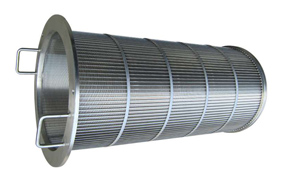
Engineering design determines the potential performance of a wedge wire centrifuge basket, but manufacturing accuracy determines whether that performance can be achieved.
Important manufacturing factors include:
Slot Consistency
Small variations in slot dimensions can affect separation accuracy and product recovery.
Welding Quality
Reliable welding ensures that profile wires maintain their position under continuous mechanical stress.
Dynamic Balance
Because centrifuge baskets operate at high rotational speeds, dimensional accuracy and balance are essential for stable equipment operation.
A precisely manufactured basket helps reduce vibration, maintain consistent separation, and protect the centrifuge system.
Even a well-designed basket may not perform effectively if operating conditions are not considered.
Important factors include:
Feed Material Characteristics
Particle size, concentration, hardness, and moisture content influence separation behavior.
For example, materials with high abrasive content may require stronger structural designs, while fine particles may require more precise slot selection.
Centrifuge Operating Parameters
Performance is also affected by:
Rotation speed
Feed distribution
Operating cycle
Cleaning method
The basket should be designed according to the actual operating environment rather than selected only by equipment dimensions.
7. Common Selection Mistakes That Reduce Performance
Many centrifuge basket problems are caused by incorrect selection rather than manufacturing defects.
Selecting Slot Size Only by Particle Size
Particle size is important, but other factors such as moisture requirements and throughput must also be considered.
Focusing Only on Initial Cost
A lower-cost basket may require more frequent replacement, increasing total operating expenses.
Ignoring Material Conditions
Using unsuitable materials in abrasive or corrosive environments can significantly shorten service life.
Using Standard Designs for Special Applications
Different industries have different separation requirements. Customized engineering is often necessary for demanding applications.
To achieve better separation results, basket selection should follow a systematic approach:
Step 1: Analyze the Process Material
Understand:
Particle characteristics
Abrasion level
Chemical environment
Step 2: Define Separation Objectives
Determine:
Required recovery efficiency
Desired moisture content
Production capacity
Step 3: Optimize Basket Design
Evaluate:
Slot opening
Open area
Wire profile
Material selection
Step 4: Match Basket Design With Equipment Conditions
Ensure compatibility with:
Centrifuge model
Operating speed
Installation requirements
This approach helps achieve more stable operation and longer service life.
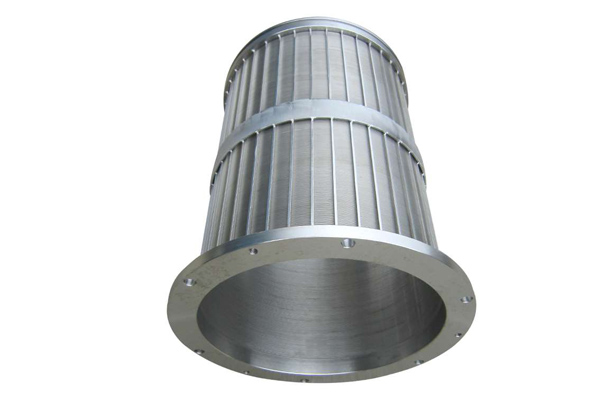
The performance of a wedge wire centrifuge basket filter is determined by the interaction of multiple engineering factors rather than a single specification.
Slot design affects separation accuracy. Open area influences drainage efficiency. Material selection determines durability. Manufacturing precision ensures that the designed performance can be achieved in real operation.
For industrial solid-liquid separation systems, the most effective basket solution is not necessarily the one with the highest capacity or lowest purchase cost, but the one that provides the best balance between separation performance, reliability, and long-term operating value.
1. What factors affect wedge wire centrifuge basket filter performance?
The main factors include slot size, open area, wire profile design, material selection, manufacturing accuracy, and operating conditions.
2. How does slot size influence centrifuge basket efficiency?
Slot size affects the balance between solid retention and liquid drainage. Incorrect selection may reduce recovery efficiency or increase moisture content.
3. Why is material selection important for centrifuge baskets?
Because different materials create different levels of abrasion and corrosion. Proper material selection improves durability and reduces maintenance frequency.
4. Can wedge wire centrifuge baskets be customized?
Yes. Basket dimensions, slot openings, materials, and structural designs can be customized according to specific centrifuge equipment and process requirements.
Related Products
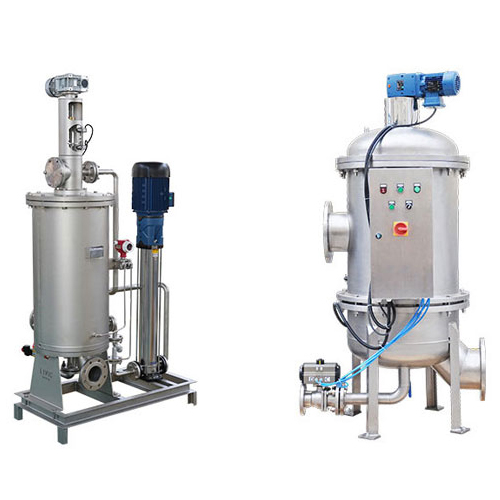
Automatic Backwash Self Cleaning Filters
86-15732177595
Jinling Mansion 2 2-3-403, Yuhua Road 106-1, Yuhua District, Shijiazhuang City, Hebei, China
Request a Quote