
Hebei YUBO Filtration Equipment Co., Ltd. Hebei YUBO Filtration Equipment Co., Ltd.
+86 15732177595
Hebei YUBO Filtration Equipment Co., Ltd. Hebei YUBO Filtration Equipment Co., Ltd.
+86 15732177595
Centrifuge baskets operate under demanding industrial conditions involving high rotational speed, continuous mechanical stress, abrasive solids, and corrosive liquids. Because of this, material selection directly affects basket lifespan, operational stability, maintenance frequency, and overall separation efficiency.
In many cases, premature basket failure is not caused by poor manufacturing, but by using a stainless steel grade that does not match the actual operating environment.
Applications such as mining slurry dewatering, chemical processing, wastewater treatment, and pharmaceutical separation all place different demands on centrifuge basket materials. The “best” stainless steel therefore depends on the balance between corrosion resistance, mechanical strength, abrasion resistance, and fabrication requirements.
What Is a Centrifuge Basket?
A centrifuge basket is a rotating filtration component used for solid-liquid separation. During operation, centrifugal force pushes liquid outward through perforations or wedge wire slots while solids remain inside the basket.
These baskets are widely used in:
Mining and coal dewatering
Chemical processing
Food and beverage production
Pharmaceutical manufacturing
Wastewater treatment
Because baskets rotate at high speed under continuous load, material durability is critical.
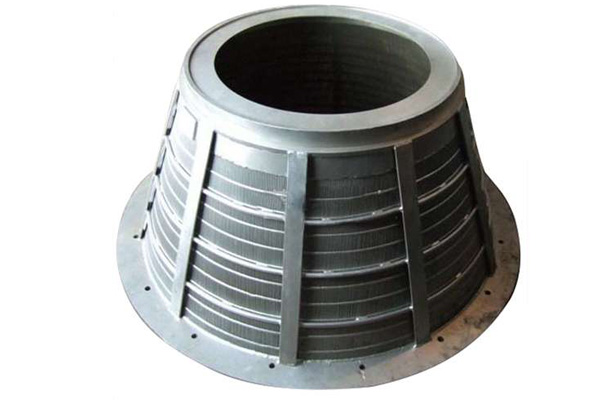
For many industrial applications, 316L stainless steel remains the standard material for centrifuge baskets.
Its main advantages include:
Good corrosion resistance
Excellent weldability
Reliable mechanical strength
Long-term durability in wet environments
Compared with 304 stainless steel, 316L offers better resistance to pitting and chloride corrosion because of its molybdenum content.
The low-carbon “L” grade is especially important in welded baskets, helping reduce corrosion problems near heat-affected welding zones.
316L is commonly used in:
Pharmaceutical systems
Wastewater treatment
Mild chemical processing
Food-grade separation equipment
However, in highly abrasive or chloride-heavy environments, 316L may still experience stress corrosion cracking or surface wear over time.
In high-stress centrifuge systems, Duplex stainless steel—especially Duplex 2205—is increasingly preferred.
This is common in:
Mining operations
Coal slurry dewatering
High-RPM centrifuges
Chloride-rich environments
Duplex stainless steel offers significantly higher yield strength than 304 or 316L, making it more resistant to:
Mechanical deformation
Cyclic fatigue stress
Stress corrosion cracking
In many mining operations, wear and fatigue become more serious problems than corrosion itself. Under these conditions, Duplex baskets often provide longer service life and reduced shutdown frequency.
Its higher material and fabrication cost, however, may not always be necessary for lighter-duty systems.
304 stainless steel remains widely used in food processing and low-corrosion applications because of its cost efficiency and good fabrication properties.
Typical applications include:
Beverage processing
Botanical extraction
Sugar processing
Light industrial separation
For non-aggressive environments, 304 can provide reliable long-term performance at a lower cost than 316L or Duplex grades.
However, prolonged exposure to chlorides, acidic liquids, or aggressive cleaning chemicals may eventually lead to corrosion issues.
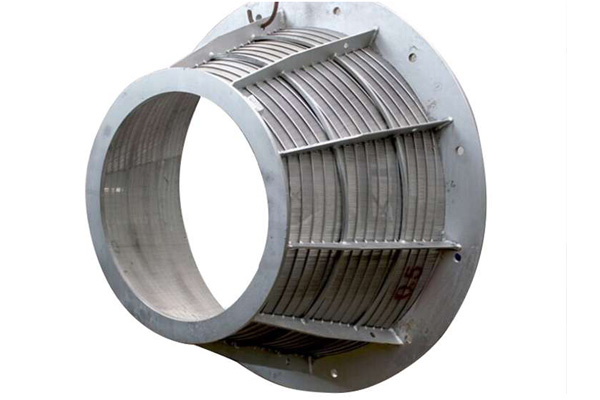
430 stainless steel is sometimes used in abrasive dewatering systems where wear resistance is more important than corrosion resistance.
This ferritic stainless steel offers:
Good structural rigidity
Strong wear resistance
Resistance to nitric acid
It may be suitable for handling abrasive mineral or coal particles, although its corrosion resistance is lower than 316L or Duplex stainless steel.
In many industrial systems, basket failure develops gradually under continuous mechanical and chemical stress.
Common problems include:
Stress corrosion cracking
Weld fatigue failure
Abrasive wear
Corrosion pitting
Rotational imbalance
These issues often begin near welded areas or high-stress zones exposed to continuous vibration and slurry impact.
Besides material selection, basket structure also affects performance.
Compared with traditional perforated baskets, wedge wire centrifuge baskets generally provide:
Higher open area
Better drainage efficiency
Reduced clogging
Improved flow distribution
This makes wedge wire designs particularly useful in continuous dewatering and slurry separation systems.
There is no single stainless steel grade suitable for every centrifuge basket application.
For general industrial processing, 316L remains the most widely used option because of its balanced performance and corrosion resistance. In high-stress or chloride-rich environments, Duplex stainless steel often provides better long-term reliability. Meanwhile, 304 and 430 continue to serve effectively in less corrosive or highly abrasive systems.
In practice, the most reliable centrifuge baskets are those designed around actual operating conditions rather than material cost alone.
What is the best stainless steel for centrifuge baskets?
316L stainless steel is the most common choice for general industrial applications, while Duplex stainless steel is preferred for high-stress or corrosive environments.
Why is Duplex stainless steel used in centrifuge baskets?
Duplex stainless steel offers higher strength and better resistance to stress corrosion cracking, making it suitable for mining and high-RPM systems.
Is 304 stainless steel suitable for food processing?
Yes. 304 stainless steel is widely used in food and beverage processing because of its hygienic properties and lower cost.
What causes centrifuge basket failure?
Common causes include corrosion, weld fatigue, abrasive wear, and long-term cyclic mechanical stress.
What is the advantage of wedge wire centrifuge baskets?
Wedge wire baskets provide higher open area, better drainage, and improved anti-clogging performance compared with perforated baskets.
Related Products
Automatic Backwash Self Cleaning Filters
86-15732177595
Jinling Mansion 2 2-3-403, Yuhua Road 106-1, Yuhua District, Shijiazhuang City, Hebei, China
Request a Quote