
Hebei YUBO Filtration Equipment Co., Ltd. Hebei YUBO Filtration Equipment Co., Ltd.
+86 15732177595
Hebei YUBO Filtration Equipment Co., Ltd. Hebei YUBO Filtration Equipment Co., Ltd.
+86 15732177595
Bag filter housings are widely used in water treatment, chemical processing, food and beverage production, oil and gas operations, and industrial manufacturing. While filtration efficiency is often the primary focus, flow rate performance plays an equally important role in determining system productivity, energy consumption, and maintenance costs.
A properly designed bag filter housing must balance flow capacity, pressure drop, contaminant retention, and filter bag life. Understanding the factors that influence flow performance can help operators maximize filtration efficiency while reducing operational expenses.
Flow rate directly affects the overall effectiveness of a filtration system.
When a bag filter housing operates within its recommended flow range, fluid passes evenly through the filter media, maintaining stable pressure and efficient contaminant removal. However, excessive flow rates can increase pressure drop, shorten filter bag life, and place additional strain on pumps and process equipment.
Common consequences of poor flow management include:
Reduced filtration efficiency
Increased energy consumption
Frequent filter bag replacement
Higher maintenance costs
Reduced production throughput
Optimizing flow rate is therefore essential for maintaining both system performance and profitability.
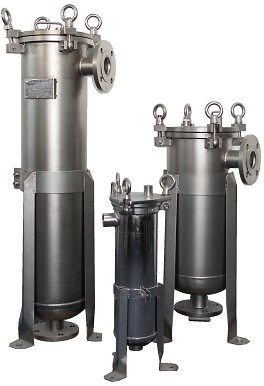
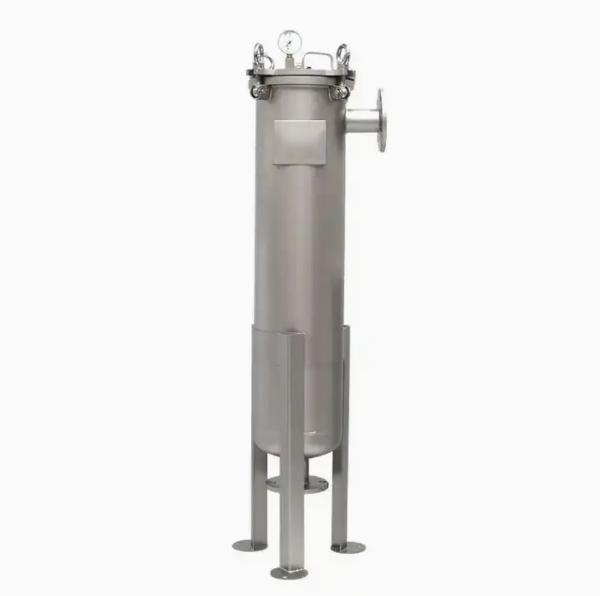
A bag filter housing contains one or multiple filter bags designed to capture suspended solids from liquids or gases.
As fluid enters the housing, contaminants are retained within the filter media while clean fluid exits through the outlet. The available filtration area, housing design, and fluid characteristics all influence how efficiently flow passes through the system.
Single-bag housings are commonly used for lower flow rates, while multi-bag configurations are preferred for larger industrial systems requiring higher throughput.
Pressure drop is one of the most important indicators of filtration performance.
As flow rate increases, fluid velocity through the filter media also increases, creating greater resistance. This results in a higher differential pressure (DP) across the housing.
A clean bag filter housing typically operates between 2 and 3 PSID. As contaminants accumulate, pressure drop gradually rises.
Most operators replace filter bags when differential pressure reaches approximately 15 PSID, as excessive resistance can negatively affect production efficiency and increase pump loading.
The relationship between flow and pressure drop is not always linear.
| Flow Rate | Relative Pressure Drop |
| 50 GPM | 1× |
| 75 GPM | 2× |
| 100 GPM | 4× |
This demonstrates why increasing flow capacity often requires larger filtration areas rather than simply forcing more fluid through the same housing.
How Bag Quantity Affects System Capacity
One of the most effective ways to improve flow performance is by increasing filtration surface area.
Adding more filter bags distributes the flow load and reduces pressure drop across each individual bag.
Typical capacities include:
| Housing Type | Typical Flow Capacity |
| Single Bag #4 | Up to 40 GPM |
| Single Bag #2 | Up to 100 GPM |
| Two-Bag Housing | 150–200 GPM |
| Four-Bag Housing | 300–400 GPM |
| Eight-Bag Housing | 600–800 GPM |
For high-flow industrial applications, multi-bag housings often provide superior performance and longer filter life compared to oversized single-bag systems.
Internal Housing Design and Flow Distribution
Flow distribution inside the housing significantly affects filtration efficiency.
A well-designed bag filter housing should provide uniform fluid distribution across all filter bags. Poor internal design can create channeling, where certain bags receive a disproportionate amount of flow while others remain underutilized.
Important design features include:
Inlet diffusers
Flow distribution plates
Proper basket support structures
Balanced outlet configurations
Uniform flow distribution helps maximize filter utilization and extend bag service life.
Viscosity
Fluid viscosity has a major influence on pressure drop.
Water-like fluids with viscosities near 1 cP generally flow easily through filtration systems. Higher-viscosity fluids such as oils, syrups, or coatings generate greater resistance and often require larger housings or increased filtration area.
Temperature
Temperature affects fluid viscosity and flow characteristics.
As temperature increases, many fluids become less viscous, allowing easier passage through the filter media and reducing pressure drop.
Contaminant Loading
The concentration of suspended solids directly impacts filtration performance.
Higher contaminant loads cause filter bags to load more quickly, resulting in faster pressure buildup and more frequent bag replacement.
Material Selection and Flow Performance
Housing material influences durability, corrosion resistance, and long-term flow performance.
Common material choices include:
| Material | Typical Application |
| Carbon Steel | General industrial fluids |
| SS304 | Water treatment systems |
| SS316L | Corrosive chemical applications |
| Duplex Stainless Steel | High-pressure environments |
For many industrial applications, 316L stainless steel provides an excellent combination of corrosion resistance, strength, and long service life.
Flow Rate Requirements Across Industries
Different industries require different flow capacities based on their production processes.
| Industry | Typical Flow Range |
| Water Treatment | 20–200 GPM |
| Food & Beverage | 50–300 GPM |
| Chemical Processing | 50–500 GPM |
| Paint & Coatings | 10–150 GPM |
| Oil & Gas | 100–1000+ GPM |
Understanding industry-specific flow requirements helps engineers select the most suitable bag filter housing configuration.
Operating a filtration system outside its optimal flow range can create significant financial consequences.
Excessive pressure drop may lead to:
Increased pump energy consumption
Reduced production capacity
More frequent filter bag changes
Increased maintenance downtime
In some facilities, a poorly optimized filtration system can increase operating costs by thousands of dollars annually through energy waste and reduced productivity.
Many industrial facilities compare bag filters with cartridge filtration systems.
| Feature | Bag Filter Housing | Cartridge Filter Housing |
| Flow Capacity | High | Moderate |
| Dirt-Holding Capacity | High | Lower |
| Maintenance Frequency | Lower | Higher |
| Pressure Drop | Lower | Higher |
| Operating Cost | Lower | Higher |
For applications involving high flow rates and large contaminant loads, bag filter housings are often the more economical solution.
To maximize filtration efficiency and maintain stable flow rates:
✓ Monitor differential pressure regularly
✓ Replace bags before reaching excessive pressure drop
✓ Match housing size to required flow rate
✓ Use multi-bag systems for high-flow applications
✓ Minimize piping turbulence
✓ Select appropriate micron ratings
✓ Consider extended-area filter bags when needed
These practices help maintain consistent performance while extending filter life.
What is the ideal pressure drop for a bag filter housing?
Most systems operate efficiently with a clean differential pressure between 2 and 3 PSID.
When should filter bags be replaced?
Filter bags are typically replaced when differential pressure reaches approximately 15 PSID.
Does a larger housing increase flow rate?
Yes. Larger housings provide greater filtration area, reducing pressure drop and improving flow capacity.
How does viscosity affect filtration performance?
Higher-viscosity fluids create greater resistance, resulting in higher pressure drop and lower flow rates.
Are multi-bag housings better for high-flow applications?
Yes. Multi-bag housings distribute flow across multiple filter bags, reducing pressure drop and extending filter life.
Flow rate performance is a critical factor in the effectiveness of any bag filter housing system. Variables such as pressure drop, bag quantity, housing design, fluid properties, and material selection all influence filtration efficiency and operating costs.
By properly sizing the housing, monitoring differential pressure, optimizing flow distribution, and selecting suitable filter media, facilities can improve throughput, reduce maintenance requirements, and achieve more reliable long-term filtration performance.
Related Products
Automatic Backwash Self Cleaning Filters
86-15732177595
Jinling Mansion 2 2-3-403, Yuhua Road 106-1, Yuhua District, Shijiazhuang City, Hebei, China
Request a Quote