
Hebei YUBO Filtration Equipment Co., Ltd. Hebei YUBO Filtration Equipment Co., Ltd.
+86 15732177595
Hebei YUBO Filtration Equipment Co., Ltd. Hebei YUBO Filtration Equipment Co., Ltd.
+86 15732177595
In industrial filtration and water treatment systems, wedge wire filter nozzles play a critical role in ensuring stable flow distribution, media retention, and efficient solid-liquid separation. However, under harsh operating conditions such as high-flow wastewater treatment, chemical processing, or abrasive slurry filtration, filter nozzles may experience clogging, corrosion, uneven flow distribution, or structural failure.
Operational failures in wedge wire filter nozzles are often caused by improper slot size selection, aggressive chemical exposure, excessive hydraulic loading, poor installation practices, or insufficient maintenance. In high-solid filtration systems, even small changes in pressure, particle size distribution, or media characteristics can significantly affect nozzle performance.
In many water treatment and ion exchange systems, filter nozzle failure not only reduces filtration efficiency but may also cause resin leakage, media loss, flow channeling, and unexpected system shutdowns.
1. Why Do Wedge Wire Filter Nozzles Become Clogged?
Clogging is one of the most common issues in wedge wire filtration systems. Tiny filter particles, biological growth, sludge, grease, or suspended solids can gradually accumulate inside the V-shaped slot openings, reducing the effective open area and restricting flow capacity.
In hard water or chemical processing applications, mineral scaling may also form on the wedge wire surface, further increasing hydraulic resistance and reducing filtration performance.
Common Causes
High suspended solid concentration
Fibrous or sticky contaminants
Mineral scaling
Inadequate backwashing
Improper slot size selection
Solutions
Regular backwashing, air scouring, and chemical cleaning are essential for maintaining stable flow rates. Selecting an appropriate slot opening based on particle size distribution can significantly reduce the risk of blockage.
For wastewater streams containing fibrous solids or sludge, slightly larger slot openings may improve self-cleaning performance while maintaining acceptable filtration precision.
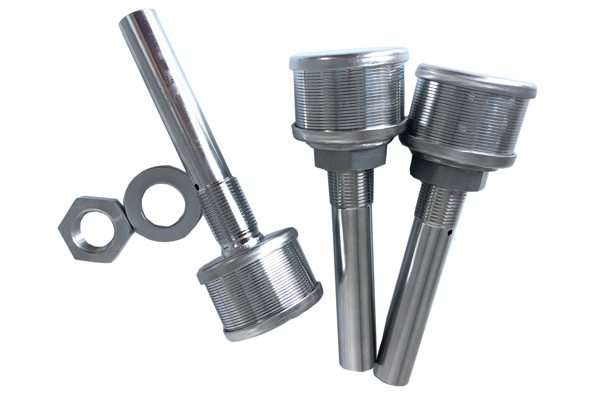
2. What Causes Resin Leakage or Media Loss?
Media leakage is a major concern in ion exchange systems, activated carbon filtration units, and pressure vessels. When wedge wire slot openings become enlarged due to abrasion or wear, expensive filter media may escape through the nozzle system.
Improper slot sizing is another common cause. If the slot width exceeds the minimum media particle size, resin bypass can occur even under normal operating conditions.
Common Causes
Abrasive slurry wear
Incorrect slot width specification
Long-term mechanical erosion
Excessive flow velocity
Solutions
The slot size should always be selected according to the media particle size distribution. As a general rule, the slot opening must remain smaller than the smallest effective media particle diameter.
Regular inspection of nozzle wear conditions is recommended for high-flow or abrasive applications. Severely worn nozzles should be replaced immediately to prevent resin loss and downstream contamination.
Filtration Media Recommended Slot Size
Ion exchange resin 0.2–0.3 mm
Activated carbon 0.25–0.5 mm
Sand filtration 0.5–1.0 mm
3. Why Does Uneven Flow Distribution Occur?
Flow maldistribution occurs when liquid flow becomes uneven across the filtration vessel. This problem often causes channeling inside media beds, reducing filtration efficiency and creating dead zones within the system.
Uneven flow distribution is commonly associated with clogged nozzles, improper nozzle spacing, inconsistent wear conditions, or hydraulic design errors.
Common Causes
Partial nozzle blockage
Uneven nozzle spacing
Incorrect hydraulic calculations
Internal debris accumulation
Differential pressure imbalance
Solutions
Routine inspection and cleaning of header lateral systems can help maintain stable flow distribution. In large filtration vessels, hydraulic calculations should be carefully optimized to ensure balanced flow across all nozzle assemblies.
Replacing worn or partially blocked nozzles can significantly improve overall system efficiency.
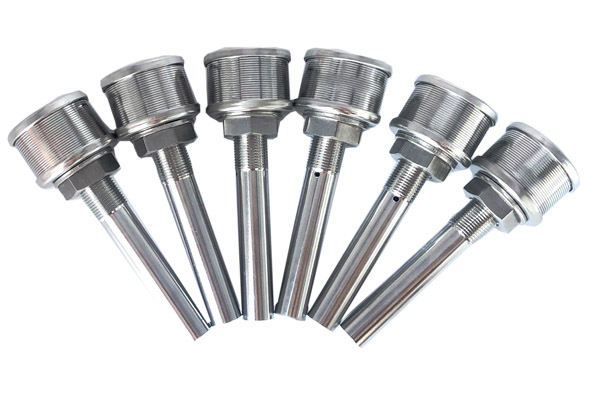
4. Mechanical Deformation and Pressure Damage
Sudden pressure spikes, water hammer effects, or excessive differential pressure may deform wedge wire filter nozzles or damage threaded connections. In severe cases, nozzle collapse may result in system shutdown or media contamination.
Improper installation practices — especially excessive tightening force — can also crack nozzle stems or damage housing connections.
Solutions
The filtration system should always operate within the nozzle’s specified pressure range. Proper installation torque and vibration control measures can greatly reduce the risk of mechanical failure.
For high-pressure filtration systems, reinforced wedge wire nozzles or duplex stainless steel structures may provide improved mechanical stability.
5. Corrosion and Abrasion in Aggressive Environments
Material degradation is a major cause of premature nozzle failure in chemical processing plants, desalination facilities, and marine filtration systems. Standard SS304 stainless steel may suffer from pitting corrosion when exposed to high-chloride or acidic environments.
In mining and slurry transport systems, abrasive particles can gradually erode wedge wire surfaces and enlarge slot openings over time.
Common Causes
Chloride-rich wastewater
Acidic or alkaline process fluids
High-velocity abrasive particles
Improper material selection
Solutions
Selecting the correct alloy material is essential for extending service life under aggressive operating conditions.
Operating Environment Recommended Material
General water treatment SS304L
Coastal or chloride water SS316L
Seawater desalination Duplex 2205
Strong acid systems Hastelloy C-276
Offshore marine applications Titanium
In highly corrosive environments, upgrading to duplex stainless steel, titanium, or nickel-based alloys can significantly improve long-term operational reliability.
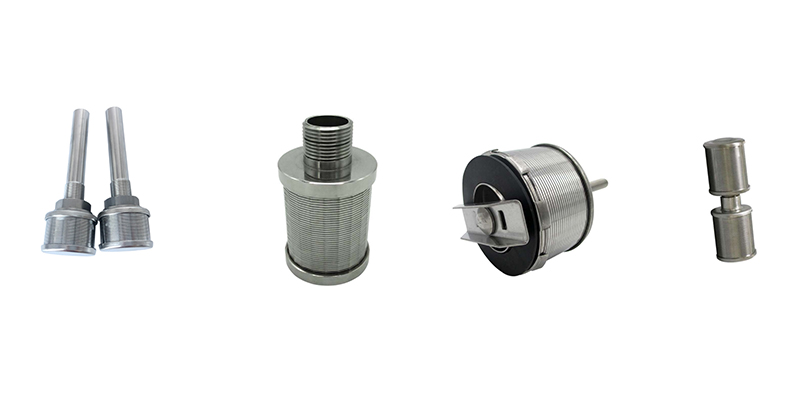
Different filtration systems require different nozzle configurations depending on flow rate, vessel design, and installation requirements.
Single Head Wedge Wire Filter Nozzle
Single head nozzles are commonly used in standard water treatment systems where moderate flow capacity and simplified maintenance are required.
Double Head Wedge Wire Filter Nozzle
Double head nozzles provide increased flow distribution and are often used in larger filtration vessels requiring higher structural stability.
Long Handle Wedge Wire Filter Nozzle
Long-handle nozzles are designed for deep media bed installations and applications where extended stem length is necessary.
Flat Plate Flow Rating Filter Nozzle
Flat plate nozzles are frequently applied in systems requiring uniform surface flow collection and optimized hydraulic distribution.
Preventive maintenance is essential for maximizing the operational lifespan of wedge wire filter nozzles.
Recommended preventive measures include:
Regular backwashing and cleaning
Monitoring pressure differentials
Inspecting slot openings for wear
Selecting proper slot size configurations
Using corrosion-resistant materials
Maintaining balanced hydraulic flow conditions
Proper nozzle selection combined with routine maintenance can significantly reduce downtime and operational costs.
What is the best slot size for wedge wire filter nozzles?
The ideal slot size depends on the filtration media and particle size distribution. Most applications use slot openings ranging from 0.2 mm to 1 mm.
Why do wedge wire nozzles clog?
Clogging is usually caused by suspended solids, biological fouling, grease accumulation, or mineral scaling inside the wedge wire slot openings.
Which material is best for seawater filtration?
SS316L is commonly used for moderate chloride environments, while Duplex 2205 or Titanium is recommended for long-term seawater applications.
How often should wedge wire filter nozzles be cleaned?
Cleaning frequency depends on the operating environment and solids concentration. High-solid wastewater systems may require more frequent backwashing and inspection.
What causes resin loss in ion exchange systems?
Resin leakage is typically caused by oversized slot openings, nozzle wear, or mechanical erosion that enlarges the wedge wire gaps over time.
Are wedge wire filter nozzles suitable for high-temperature applications?
Yes. Specialized alloys such as Hastelloy and Inconel can withstand high temperatures and aggressive chemical environments in industrial processing systems.
Wedge wire filter nozzles are widely used in industrial filtration, water treatment, and media retention systems due to their high strength, excellent flow performance, and resistance to clogging. However, operational problems such as clogging, corrosion, resin leakage, and flow maldistribution can significantly reduce system efficiency if not properly addressed.
By selecting the correct slot size, material grade, and nozzle configuration — while implementing proper maintenance practices — industrial operators can greatly improve filtration reliability, reduce maintenance costs, and extend equipment service life.
Related Products
Automatic Backwash Self Cleaning Filters
86-15732177595
Jinling Mansion 2 2-3-403, Yuhua Road 106-1, Yuhua District, Shijiazhuang City, Hebei, China
Request a Quote