
Hebei YUBO Filtration Equipment Co., Ltd. Hebei YUBO Filtration Equipment Co., Ltd.
+86 15732177595
Hebei YUBO Filtration Equipment Co., Ltd. Hebei YUBO Filtration Equipment Co., Ltd.
+86 15732177595
Bag filter housings are among the most widely used filtration systems in industrial process applications. From water treatment and chemical production to food processing and pharmaceuticals, they provide a cost-effective solution for removing suspended solids and protecting downstream equipment.
However, the performance of a bag filter housing is determined by much more than simply installing a filter bag. Flow rate, pressure drop, housing design, bag selection, and operating conditions all play critical roles in filtration efficiency and system reliability.
Understanding these performance factors allows engineers to optimize filtration processes, reduce operating costs, and maximize equipment lifespan.
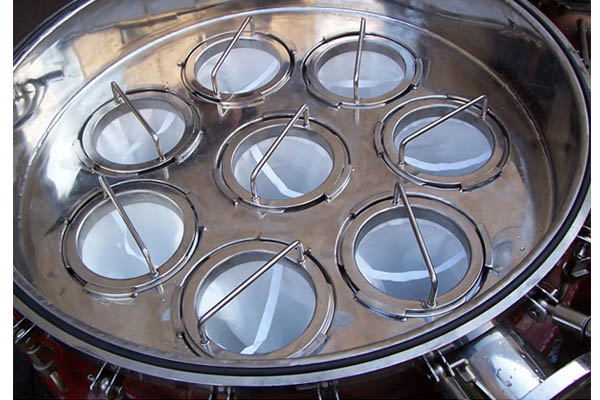
A bag filter housing is a pressure vessel designed to hold one or multiple filter bags through which process fluids pass. As fluid flows from the inlet to the outlet, contaminants larger than the bag's micron rating are captured inside the filter media.
Bag filter housings are commonly available in:
Single-bag housings
Multi-bag housings
Top-entry designs
Side-entry designs
High-flow bag filter systems
Depending on the application, housings may be manufactured from:
Stainless Steel 304
Stainless Steel 316L
Duplex Stainless Steel
Carbon Steel with protective coatings
The housing serves not only as a containment vessel but also as a critical component affecting overall filtration performance.
Filtration Efficiency
Filtration efficiency measures the ability of the filter system to remove contaminants from the process stream.
Performance depends on:
Filter bag micron rating
Particle size distribution
Flow velocity
Fluid properties
Bag material
Typical bag filters can provide retention ratings ranging from 1 micron to 800 microns.
Selecting an excessively fine micron rating may improve particle capture but often increases pressure drop and shortens bag life.
Flow Capacity
Flow capacity determines how much fluid can be processed without excessive pressure loss.
Typical industrial bag filter housings handle:
| Housing Size | Typical Flow Capacity |
| Size #1 Bag | 10–20 m³/h |
| Size #2 Bag | 20–40 m³/h |
| Multi-Bag Housing | 100–500+ m³/h |
Actual capacity varies according to:
Fluid viscosity
Contaminant loading
Bag media type
Differential pressure limits
An undersized housing can significantly reduce production efficiency.
Pressure Drop Performance
Pressure drop is one of the most important indicators of bag filter housing performance.
As fluid passes through the filter bag, resistance develops due to:
Bag media structure
Captured contaminants
Flow velocity
Fluid viscosity
A clean filter bag typically exhibits low differential pressure.
As contaminants accumulate, pressure gradually rises until bag replacement becomes necessary.
Maintaining low pressure drop helps:
Reduce pump energy consumption
Increase flow stability
Extend filter life
Lower operating costs
For many industrial systems, a pressure differential of 0.1–0.5 bar is common during normal operation, while bag replacement is often recommended when differential pressure reaches 1.0–2.0 bar.
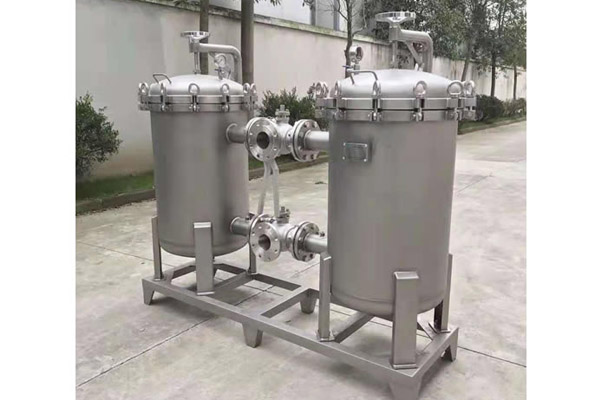
Inlet and Outlet Configuration
Poor flow distribution can create localized high-velocity zones inside the housing.
Consequences include:
Uneven bag loading
Premature filter blockage
Increased pressure loss
Reduced filtration efficiency
Engineered inlet diffusers and optimized flow paths help distribute fluid evenly across the filter surface.
Top-Entry vs. Side-Entry Designs
Top-entry housings generally offer superior sealing performance because the fluid pressure helps maintain positive bag sealing.
Advantages include:
Reduced bypass risk
Improved filtration accuracy
Better contaminant retention
Side-entry housings may offer easier maintenance but require careful sealing system design.
For critical process applications, top-entry configurations are often preferred.
Multi-Bag Housing Performance
High-flow industrial applications frequently utilize multi-bag housings.
Benefits include:
Increased filtration area
Lower face velocity
Reduced pressure drop
Longer service intervals
For example, a six-bag housing may provide nearly six times the filtration area of a single-bag system while operating at significantly lower differential pressure.
The Role of Filter Bag Selection
Even the most advanced housing cannot compensate for an improperly selected filter bag.
Key considerations include:
Micron Rating
Common ratings include:
1 micron
5 micron
10 micron
25 micron
50 micron
100 micron
The ideal rating balances contaminant removal and flow performance.
Filter Media
Different media offer varying performance characteristics:
| Material | Typical Applications |
| Polypropylene | Water treatment, chemicals |
| Polyester | High-temperature processes |
| Nylon Mesh | Reusable coarse filtration |
| PTFE | Aggressive chemical environments |
Media compatibility directly affects filtration efficiency and service life.
Several operational issues can negatively affect performance:
Excessive Contaminant Loading
High solids concentrations accelerate bag clogging and increase pressure drop.
Incorrect Housing Sizing
Undersized systems often experience:
High velocity
Short bag life
Increased maintenance frequency
Viscous Fluids
Liquids with high viscosity generate greater resistance and may require larger filtration areas.
Poor Maintenance Practices
Failure to replace bags at the proper differential pressure can reduce process efficiency and increase operating costs.
To maximize bag filter housing performance, engineers should:
Select the correct micron rating
Size housings according to actual flow requirements
Monitor differential pressure regularly
Optimize inlet flow distribution
Use chemically compatible filter media
Consider multi-bag designs for high-flow systems
A properly engineered filtration system can reduce maintenance costs while improving product quality and process consistency.
What is the ideal pressure drop for a bag filter housing?
Most systems operate efficiently with a clean pressure differential between 0.1 and 0.5 bar. Bag replacement is often recommended when differential pressure approaches 1–2 bar.
How does housing size affect filtration performance?
Larger housings provide more filtration area, resulting in lower flow velocity, lower pressure drop, and longer filter bag service life.
Are multi-bag housings more efficient than single-bag systems?
For high-flow applications, multi-bag housings generally offer better hydraulic performance and lower operating costs due to increased filtration area.
What is the most important factor in bag filter performance?
The combination of proper housing sizing, appropriate filter media selection, and differential pressure management typically has the greatest impact on overall performance.
Bag filter housing performance in process filtration depends on the interaction of multiple engineering factors, including flow rate, pressure drop, housing design, filter media, and contaminant loading. While filter bags perform the actual particle removal, housing design largely determines how efficiently the filtration system operates.
By optimizing housing configuration, flow distribution, and filter selection, facilities can achieve higher filtration efficiency, lower energy consumption, longer service intervals, and improved process reliability. In modern industrial filtration systems, the bag filter housing should be viewed not merely as a vessel, but as a critical component that directly influences overall process performance.
Related Products
Automatic Backwash Self Cleaning Filters
86-15732177595
Jinling Mansion 2 2-3-403, Yuhua Road 106-1, Yuhua District, Shijiazhuang City, Hebei, China
Request a Quote