
Hebei YUBO Filtration Equipment Co., Ltd. Hebei YUBO Filtration Equipment Co., Ltd.
+86 15732177595
Hebei YUBO Filtration Equipment Co., Ltd. Hebei YUBO Filtration Equipment Co., Ltd.
+86 15732177595
In industrial filtration systems, bag filter housing selection directly affects filtration efficiency, operating stability, maintenance frequency, and overall lifecycle cost. Although filter bags are responsible for particle removal, the housing design determines how effectively the filtration process performs.
An incorrectly selected bag filter housing may lead to excessive pressure drop, frequent filter replacement, leakage risks, and unnecessary downtime. A properly engineered housing, however, can improve flow distribution, extend filter bag service life, and provide reliable protection for downstream equipment.
A bag filter housing is a pressure vessel designed to hold one or multiple filter bags for liquid filtration. During operation, contaminated fluid enters the housing, passes through the filter bag from the inside outward, and exits after solid particles are captured.
A typical bag filter housing consists of:
Pressure vessel body
Filter basket support
Filter bag
Sealing structure
Cover and closure system
Inlet and outlet connections
Bag filter housings are widely used in:
Chemical processing
Water treatment
Food and beverage production
Paint and coating industries
Oil and gas systems
Pharmaceutical applications
Industrial process filtration
Flow capacity is one of the most important parameters when choosing a bag filter housing.
An undersized housing can create:
High pressure drop
Shorter filter bag life
Increased pump load
Reduced filtration efficiency
A properly sized housing allows sufficient filtration area and maintains stable flow conditions.
Key factors affecting flow capacity include:
Required flow rate
Fluid viscosity
Contaminant concentration
Number of filter bags
Bag surface area
For high-flow applications, multi-bag filter housings are often preferred because they provide larger filtration areas and longer operating cycles.
The filter bag configuration directly influences filtration performance.
Common bag sizes include:
Standard Size #1 bags
Standard Size #2 bags
Larger industrial filter bags
The selection depends on:
Required flow rate
Particle loading
Available installation space
Maintenance requirements
A larger filter bag provides:
Higher dirt-holding capacity
Longer service intervals
Reduced replacement frequency
For applications with high contamination levels, selecting a larger capacity bag configuration can significantly reduce operating costs.
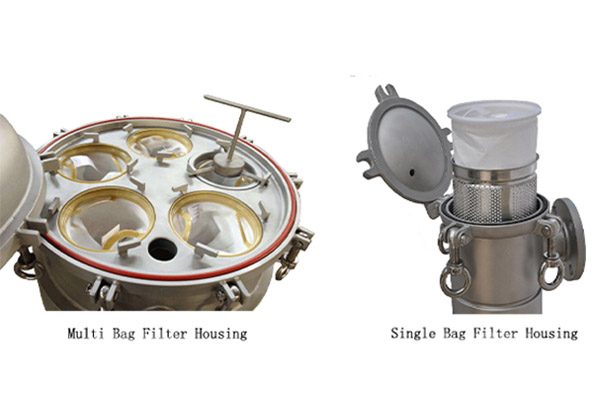
Bag filter housings operate under pressure, making mechanical strength a critical consideration.
Engineers should evaluate:
Maximum operating pressure
Design pressure
Temperature conditions
Pressure fluctuations
A reliable housing design should provide:
Strong structural integrity
Leak prevention
Safe operation under pressure variations
Common closure designs include:
Bolted covers
Clamp closures
Swing bolt systems
The appropriate design depends on operating pressure and maintenance requirements.
Material compatibility determines the service life of a bag filter housing.
Common materials include:
| Material | Typical Applications |
| Carbon Steel | General industrial fluids |
| SS304 | Water treatment and standard applications |
| SS316L | Chemical and corrosive environments |
| Duplex Stainless Steel | High chloride conditions |
Material selection should consider:
Fluid chemistry
Temperature
Corrosion potential
Cleaning requirements
Choosing an unsuitable material may result in corrosion, leakage, and unexpected equipment replacement.
Pressure drop is an important indicator of filtration system performance.
As contaminants accumulate inside the filter bag, resistance increases.
Factors affecting pressure drop include:
Filter bag micron rating
Bag material
Flow velocity
Contaminant concentration
Housing internal design
A well-designed bag filter housing minimizes unnecessary turbulence and allows smooth fluid flow.
Lower pressure drop helps:
Reduce energy consumption
Extend filter bag life
Maintain stable process conditions
Selecting between single-bag and multi-bag housings depends on application requirements.
Single Bag Filter Housing
Advantages:
Compact design
Lower initial cost
Easy installation
Suitable for:
Small flow systems
Laboratory processes
General industrial filtration
Multi Bag Filter Housing
Advantages:
Higher flow capacity
Longer operating time
Reduced maintenance frequency
Suitable for:
Large industrial systems
Continuous production processes
High contamination applications
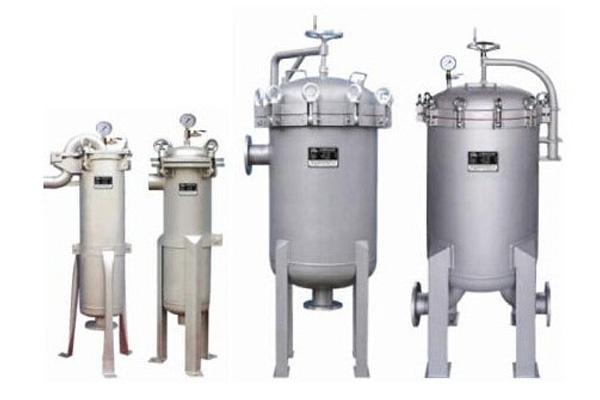
Maintenance efficiency has a direct impact on operating costs.
A well-designed bag filter housing should allow:
Quick filter bag replacement
Easy cleaning access
Reliable sealing
Minimal downtime
Features such as quick-opening covers and ergonomic designs help reduce maintenance time and improve operator efficiency.
In continuous industrial processes, reducing maintenance downtime can provide significant economic benefits.
Different industries require different bag filter housing designs.
Water Treatment
Key requirements:
Corrosion resistance
High flow capacity
Easy maintenance
Recommended materials:
SS304
SS316L
Chemical Processing
Key requirements:
Chemical compatibility
Pressure resistance
Long service life
Recommended materials:
SS316L
Special alloys
Food and Beverage
Key requirements:
Hygienic construction
Easy cleaning
Stainless steel surfaces
Recommended:
Stainless steel sanitary bag filter housings
Oil and Gas
Key requirements:
High pressure capability
Strong mechanical structure
Reliable sealing
Recommended:
Heavy-duty industrial housings
Before selecting a bag filter housing, engineers should evaluate:
1. Flow Requirements
Determine required filtration capacity.
2. Filtration Accuracy
Select suitable bag micron ratings.
3. Operating Conditions
Consider pressure, temperature, and fluid characteristics.
4. Material Compatibility
Ensure corrosion resistance.
5. Maintenance Requirements
Evaluate cleaning frequency and replacement efficiency.
6. Lifecycle Cost
Consider long-term operating expenses rather than only initial purchase cost.
1. How do I choose the right bag filter housing size?
The housing size should match the required flow rate, fluid properties, contamination level, and acceptable pressure drop.
2. What material is best for a bag filter housing?
SS316L is commonly selected for corrosive environments, while SS304 is suitable for many general industrial applications.
3. What is the difference between single-bag and multi-bag filter housings?
Single-bag housings are suitable for smaller flow applications, while multi-bag housings provide higher capacity and longer service intervals.
4. How can bag filter housing reduce operating costs?
Proper selection reduces pressure loss, extends filter bag life, minimizes downtime, and improves overall filtration efficiency.
Selecting the right bag filter housing for industrial filtration requires more than matching a filter bag size. Flow capacity, pressure rating, material compatibility, pressure drop, and maintenance requirements all influence long-term performance.
A properly engineered bag filter housing improves filtration reliability, reduces operating costs, and protects downstream equipment.
For industrial applications requiring stable and efficient liquid filtration, the correct bag filter housing selection is a key factor in achieving long-term operational success.
Related Products
Automatic Backwash Self Cleaning Filters
86-15732177595
Jinling Mansion 2 2-3-403, Yuhua Road 106-1, Yuhua District, Shijiazhuang City, Hebei, China
Request a Quote